
Commercial Kitchen Plumbing for Barbados Restaurants: Grease Traps, Code, and Common Failures
Category: Commercial Guides · Published: November 5, 2026 · 7 min read
By Jason Walrond — Managing Director, Pure Source Plumbing Inc.
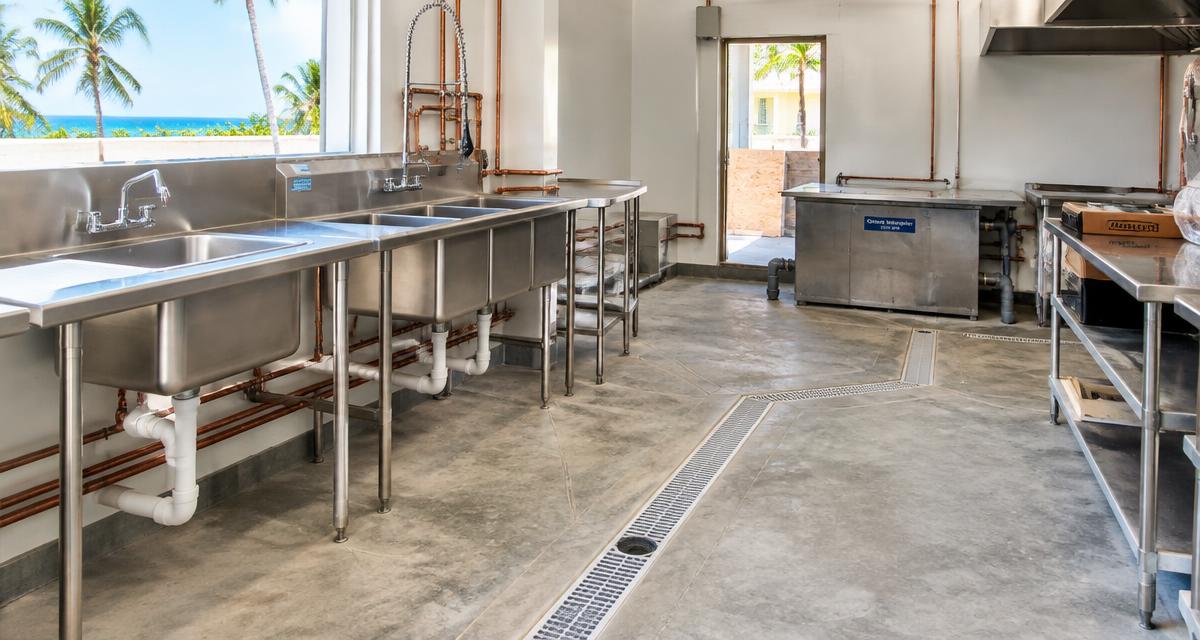
A restaurant can have the best menu, location and fit-out in Barbados and still lose weeks of trading time to a plumbing problem that was baked in before the first table was set. Commercial kitchens put more demand on a plumbing system than almost any other building type: constant hot water, heavy drainage, and a steady stream of fats, oils and grease (FOG) that most drainage systems were never designed to carry. After 25 years installing plumbing across Barbados, the pattern is the same: kitchens planned with a plumber at the design stage open on time. Kitchens that treat plumbing as something to fit in once the equipment arrives spend their first months dealing with backups, failed inspections and rework. This guide covers what restaurant owners, developers and fit-out contractors should have settled before construction starts.
Pure Source Plumbing by the Numbers
- 25+
- Years Experience
- Major
- Projects Delivered
- Island-wide
- Service Coverage
Why Grease Management Is a Compliance Issue in Barbados, Not Just a Maintenance One
FOG is a recognised problem for Barbados's sewer network. The Barbados Water Authority has publicly reported increases in FOG in the sewer system, and the Ministry of Energy and Water Resources, working with the Ministry of Health and Wellness, has stepped up grease trap inspections in several parishes under the Health Services (Building) Regulations, 1969 and the Barbados Water Authority (Sewerage) Regulations, 1982. Officials have also reminded businesses that penalties apply for breaches.
The practical takeaway for a new restaurant: a properly designed and installed grease trap isn't optional equipment, and it isn't something to settle after the kitchen layout is final. It affects where the kitchen can sit in the building, how drain lines run, and where access for servicing has to be.
1. Grease Trap Sizing, Placement and Access
The right grease trap depends on the kitchen's actual use, not just its square footage: the number and type of fixtures connected, the volume and type of cooking, and the hours of operation. A trap that is undersized will fill quickly, overflow, and force expensive pump-outs far more often than planned.
Specific sizing and approval requirements should be confirmed against current Barbados regulations and with the relevant authorities for each project, not assumed from another jurisdiction's rules.
- Which fixtures connect to the trap - pot sinks, prep sinks, dishwashers and floor drains all carry grease differently.
- Indoor versus outdoor placement - an outdoor trap buried beneath finished paving or landscaping is a future problem.
- Service access - a trap a pump-out truck or technician can't easily reach will be serviced less often.
2. Floor Drains and Slab Planning
Commercial kitchens need floor drains positioned where water actually collects: under dishwashing stations, beneath cooking lines, in prep areas, and in cold rooms. Placing them wrongly, or sloping the floor poorly, leaves standing water that creates both a hygiene issue and a slip hazard.
This is an underslab decision. Drain locations and floor slope must be fixed before the slab is poured, because once concrete is down those lines are effectively permanent.
3. Hot Water Capacity for a Working Kitchen
Domestic-scale water heating rarely keeps up with a busy commercial kitchen. Dishwashing, pot washing, hand sinks and cleaning all draw hot water, often at the same moment during service. The question is not how much hot water the kitchen uses over a day, but how much it needs at peak.
- Peak simultaneous demand across dishwashing, prep and cleaning
- Whether the dishwasher requires a booster heater to reach its operating temperature
- Where the heating equipment sits so hot water reaches distant sinks quickly
- How the system is backed up if one unit fails mid-service
4. Supply Pressure and Water Storage
A kitchen that loses pressure or supply mid-service loses revenue immediately. Barbados businesses deal with periodic supply interruptions and pressure variation from the mains, so a restaurant's plumbing plan should address storage capacity and a booster pump arrangement. Water source, connection strategy and storage should be resolved before the site plan is finalised and submitted to the Planning and Development Department, not retrofitted into it.
5. Coordinating Kitchen Equipment With Plumbing Rough-In
Commercial kitchens are equipment-driven. Dishwashers, combi ovens, ice machines, fryers with water-fed components and extraction systems all have specific connection points, clearances and drainage requirements. If the plumber is working from a generic layout rather than the final equipment schedule, connections end up in the wrong place and walls get reopened.
The fix is simple: finalise the equipment schedule early, and give the plumbing contractor the actual manufacturer rough-in dimensions before the framing stage.
The Costliest Mistakes We See
These five patterns cause most failed inspections and rework in Barbados commercial kitchens.
- Treating the grease trap as an afterthought.
- Floor drains placed from the drawing, not from how the kitchen actually works.
- Sizing hot water for an average day instead of the peak hour.
- Bringing the plumber in after the equipment is ordered.
- No plan for servicing traps and key valves.
Planning a Restaurant or Commercial Kitchen in Barbados?
Bring Pure Source Plumbing into the design stage. We review layouts and equipment schedules, flag plumbing conflicts before they're built in, and provide a detailed estimate before work begins.
Request a Design-Stage Consultation · View Commercial Services
Frequently Asked Questions
Does a restaurant in Barbados need a grease trap?
Grease traps are a regulated part of commercial food service in Barbados. The Barbados Water Authority and the Ministry of Health and Wellness have been inspecting grease traps and enforcing FOG disposal rules, so a new restaurant should plan for a properly designed trap from the start and confirm current requirements with the relevant authorities.
When should a plumber be involved in a restaurant fit-out?
At the design stage, before the kitchen layout and equipment schedule are fixed. Grease trap placement, floor drain locations and hot water capacity all depend on the layout, and they are far cheaper to settle on paper than after construction begins.
Why do commercial kitchens need different plumbing from a home kitchen?
A commercial kitchen draws far more hot water at peak times, produces far more grease, and needs floor drainage and equipment connections that domestic plumbing isn't designed for. Systems sized for domestic use tend to fail under commercial loads.
Can a grease trap be added after a kitchen is built?
Sometimes, but it is usually more expensive and disruptive than planning it from the start, particularly if the slab is already poured or the site has no practical space or access for one.
What happens if a restaurant doesn't maintain its grease trap?
Overloaded traps cause backups, odours and drainage failures inside the premises, and improper FOG disposal can also lead to penalties under Barbados regulations. Regular servicing is part of operating a compliant kitchen.
Related on Pure Source Plumbing
- Plumbing rough-in timing: when to bring in your plumber during a Barbados build
- New construction plumbing in Barbados: what to expect
- How to choose a plumbing contractor in Barbados
- Commercial plumbing services in Barbados
- About Jason Walrond and 25 years of Barbados plumbing experience
- Request a design-stage consultation
- Barbados Water Authority (official site)
- Barbados Planning and Development Department (official site)
Contact Pure Source Plumbing: 1 (246) 837-5356 · puresourceplumbing@gmail.com · Request a project estimate.